
Costume Therapy™ — A Living Method

A Note Before Reading
This manifesto marks a formal articulation of work I have been developing, testing, and refining for years.
Costume Therapy™ did not emerge from theory alone. It emerged from lived practice — from working in performance, facilitation, social environments, and embodied inquiry, and from witnessing what actually reorganizes identity when insight is no longer enough.
I am publishing this now as a point of orientation and authorship. It is meant to clarify what this work is, what it is not, and the philosophical ground it stands on — for future clients, fellow clinicians, researchers, and potential practitioners.
This document is not instructional. It does not attempt to explain every technique or container. Instead, it names the spine of the work: the assumptions, values, and design logic that guide how Costume Therapy is practiced and why it diverges from existing modalities.
If you are reading this as a client, let it orient you.
If you are reading this as a practitioner or researcher, let it situate the work.
If you are reading this out of curiosity, take it as an invitation to understand how identity, embodiment, and lived experience intersect here.
The manifesto follows.
— D. I. Diamond
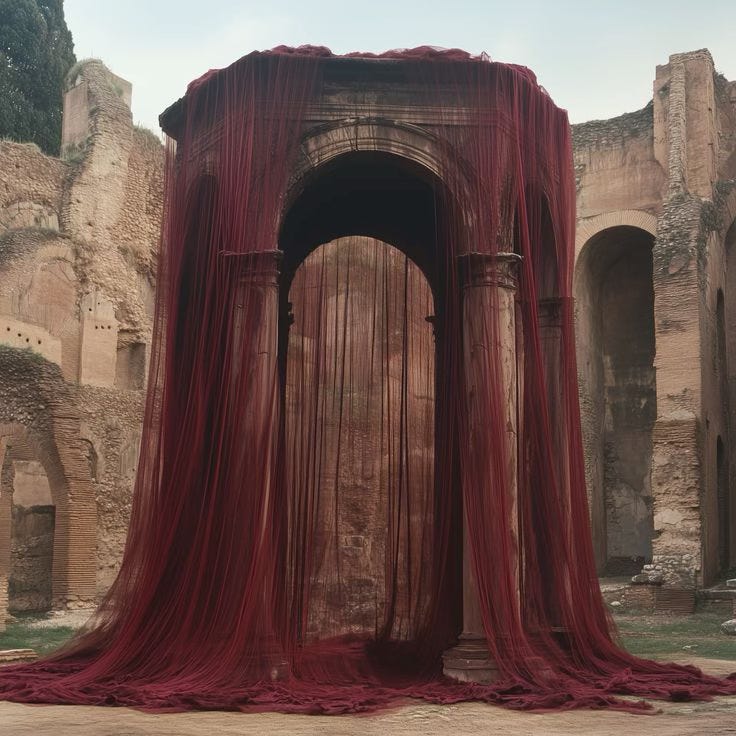
Costume Therapy™
A Living, Embodied Method for Identity Reconstruction
Costume Therapy™ is a living, embodied methodology developed by independent researcher, artist, and facilitator D. I. Diamond. It integrates expressive arts, somatic psychology, role theory, and lived social experience to support adult identity exploration, personal transformation, and inner liberation.
This work operates beyond the traditional boundaries of the clinic, classroom, and workshop. While informed by established frameworks—including Internal Family Systems, Jungian and Freudian depth psychology, drama therapy, psychodrama, somatic experiencing, and role method—Costume Therapy deliberately moves into the relational, social, and lived field, where identity is not only examined, but experienced.
Where many therapeutic approaches focus on interpreting the past, Costume Therapy asks a different question:
Who are we now—and who might we become?
Costume Therapy treats identity as dynamic, relational, and capable of transformation through imagination, embodiment, and lived experience. When past experiences fracture identity or personality structures, the work does not seek to eliminate surviving configurations, but to recognize them as adaptive, intelligent parts with histories, motivations, and trajectories of their own.
From this foundation, the work moves forward—mapping the inner cast, observing how roles behave in real-world social environments, and consciously designing new roles that can anchor growth ambitions into lived reality.
Costume, performance, and role-play function here not as spectacle, but as instruments. Through intentional adornment, movement, voice, and interaction, participants externalize internal dynamics, access subconscious material, and generate future-oriented memory through embodied experience. Expression itself becomes a mechanism of integration—held within a relational container of active witnessing rather than cognitive analysis.
Uniquely, Costume Therapy introduces immersion and fieldwork as core components of the method. Identity is explored not only in facilitated spaces, but within live social fields, where roles are tested, refined, and metabolized through contact with reality.
This work holds both introverted individuals seeking greater embodied expression and extraverted individuals already carrying high expressive intensity. Through symbolic distance, role-based containment, and consent-based ritual structure, the practice allows for loud, eccentric, and emotionally expansive expression without collapse, spectacle, or pathologization.
Costume Therapy diverges from existing modalities through:
Embodiment as the agent of transformation, not metaphor
Ritual without dogma, designed for modern, pluralistic contexts
Co-created, future-facing narrative identity
Social play as a therapeutic mechanism for adults
The integration of aesthetic presence with somatic change
Costume Therapy™ is not a fixed system. It is a living, evolving practice—one that treats identity as infrastructure, expression as intelligence, and transformation as something that must be lived, not merely understood.
Danielle I Diamond(barnes)